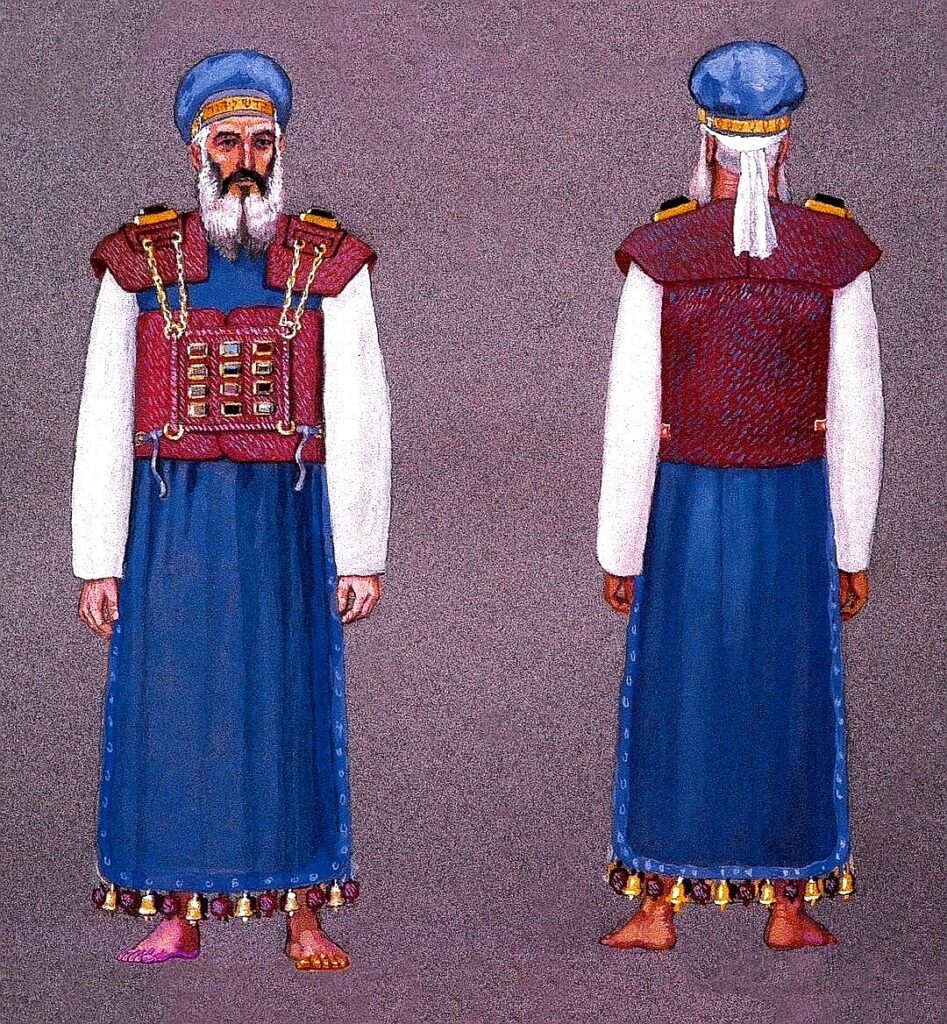
The priests, known as the Cohanim, wore white linen tunics with a sash woven of blue, purple, and scarlet. The Cohanim were the priests of Israel, the sons of Aaron, set apart by God to minister in the Temple. They were entrusted with the sacred responsibility of overseeing the offerings and sacrifices through which the people of Israel were reconciled to God.
Jesus came at a time when the Temple was still standing and the Aaronic priesthood was fully functioning. The sons of Aaron examined every sacrifice, confirming that it was spotless and without blemish before it could be offered to God.
This raises a profound question:
If Jesus was the final and ultimate sacrifice, should there not have been a priestly witness, some official recognition, declaring Him acceptable?
There was.
Born into the priesthood, into the house of Aaron, was a child whose lineage ran through both his father and his mother, a pure-blooded priest. His Hebrew name was Yochanan. You know him as John the Baptist.
Yochanan was not only a prophet—he was a priest.
And it was this priest who presented the sacrifice.
In the Temple system, it was the Cohanim who identified the sacrifice and certified that it was worthy to be offered. In the same way, it was Yochanan who publicly identified Jesus as the acceptable sacrifice before all Israel.
Standing at the Jordan River, John declared of Jesus:
“Behold, the Lamb of God who takes away the sin of the world.”
This was not poetic language alone; it was priestly certification.
The last priest of the old order publicly identified the final sacrifice of the new covenant.
The Temple system had examined the Lamb—and found Him spotless.
Jesus did not bypass the priesthood.
He fulfilled it.